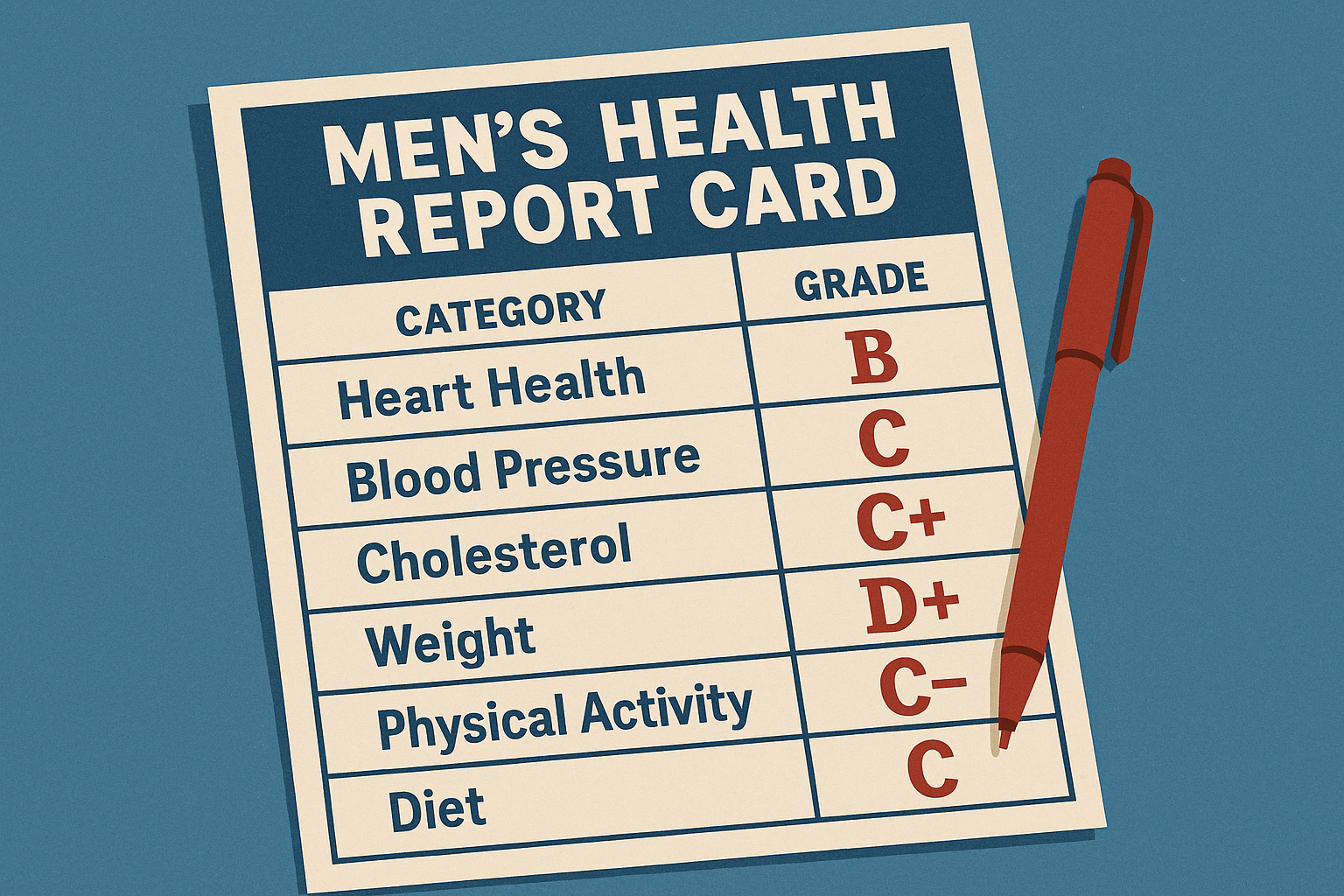
What if a simple fertility test could tell you about your risk for heart disease, diabetes, and other serious health problems? That’s the question driving new research into male fertility as a window into overall health.
New research by Nathan Starke and his colleagues, published in the International Journal of Impotence Research, investigated whether conventional semen analysis—typically used to assess fertility—could also serve as a screening tool for general health problems in young men. The findings suggest that fertility markers may reveal underlying health issues long before symptoms appear.
For more information, read the full study here: https://www.nature.com/articles/s41443-024-00949-9
The Declining Fertility Puzzle
Male fertility has been declining for decades, sparking widespread concern and media coverage. But why? Is it environmental toxins? Lifestyle changes? Obesity? The answer likely involves all of these factors and more.
Dr. Nathan Starke, a urologist and andrologist who contributed to the recent research, explains the motivation: “Fertility, especially among men, has been declining for quite some time. We wanted to figure out whether, with the obesity epidemic and diabetes and cardiovascular issues that are also becoming more common, you could use semen analysis as an indicator that general health may in fact be a bigger part of the problem than just isolated infertility.”
The study aimed to identify men whose fertility problems stemmed from addressable health issues rather than isolated reproductive system problems. If poor overall health contributes to infertility, then improving that health might restore fertility without specialized fertility treatments.
Your Body Is One Connected System
The research builds on a simple but often overlooked principle: your body functions as an integrated system. Poor health in one area affects other areas, including reproduction.
Dr. Starke shares a personal example: “At the beginning of COVID, I gained almost exactly 19 pounds. I started snoring. I started having reflux and heartburn—basically developed these issues that I’d never had in my life before. Then I lost the weight, and those things went away completely.”
“When men lose weight or get other chronic health issues fixed, every single aspect of their health gets better—as silly as it is to say.”
This interconnectedness extends to fertility. Men with obesity, diabetes, cardiovascular disease, or metabolic syndrome often have poorer sperm quality. But here’s the crucial insight: if you improve their overall health, their fertility often improves too, even without fertility-specific interventions.
Screening Beyond Reproduction
The implications extend beyond fertility treatment. If semen analysis correlates with general health markers, it could become a valuable screening tool for young men who rarely see doctors.
Think about it: men in their twenties and thirties typically feel healthy and avoid routine medical care. But many already have risk factors for serious diseases—high blood pressure, prediabetes, high cholesterol—that go undetected because they’re not getting screened.
A fertility test, performed for couples trying to conceive, might reveal that the male partner has underlying health problems worth investigating. A man who comes in worried about his ability to have children might leave with knowledge about his cardiovascular risk or metabolic health.
What the Research Found
While the study didn’t follow men long enough to prove that treating health problems definitely improves fertility, it established important correlations between semen quality and other health indicators.
“The idea is that by addressing overall health concerns more globally—addressing the man’s health—that can lead to improved fertility just as a byproduct of being healthier,” Dr. Starke explains.
This fits with what fertility specialists have observed clinically: men who lose weight, control their diabetes, quit smoking, improve their sleep, and manage stress often see improvements in sperm count and quality without any fertility-specific treatments.
The Bigger Picture
This research touches on a larger issue in men’s health: getting men to care about their health before problems become serious.
Women have built-in reasons to engage with healthcare—gynecological exams, contraception management, pregnancy care, mammograms. Men often have no equivalent until their forties or fifties, when prostate and colon cancer screening begins.
Fertility concerns might provide that missing entry point. A couple trying to conceive gives men a concrete, personally meaningful reason to see a doctor and get evaluated. If that evaluation can simultaneously screen for broader health problems, it becomes an opportunity for preventive medicine.
Clinical Applications
For physicians treating infertility, this research supports a more holistic approach. Rather than immediately turning to assisted reproductive technologies, starting with a comprehensive health evaluation makes sense.
Basic health optimization—weight loss, blood sugar control, blood pressure management, smoking cessation—should be first-line “treatment” for many men with fertility concerns. These interventions cost less than IVF, have no side effects (only benefits), and may improve fertility while also reducing long-term disease risk.
For men seeking fertility treatment, the message is equally clear: your overall health matters for your reproductive success. The lifestyle changes your doctor recommends aren’t just about having a baby—they’re about your long-term wellbeing.
Future Directions
More research is needed to establish exactly which health markers correlate most strongly with fertility, and to prove definitively that treating health problems improves reproductive outcomes. Longer-term studies following men through health interventions and tracking fertility results would be particularly valuable.
Researchers are also exploring whether specific semen parameters—sperm count, motility, morphology—correlate with specific health conditions, potentially allowing semen analysis to function as a screening tool for particular diseases.
What This Means for You
If you’re a man concerned about fertility, consider it an opportunity to evaluate your overall health. Ask your doctor to check not just fertility parameters but also:
- Blood pressure
- Blood sugar and hemoglobin A1c (for diabetes screening)
- Cholesterol levels
- Thyroid function
- Testosterone levels
- Body mass index and waist circumference
If any of these markers are abnormal, addressing them may improve both your fertility and your long-term health. Regular exercise, a healthy diet, adequate sleep, stress management, and maintaining a healthy weight benefit your entire body—including your reproductive system.
The declining fertility trend affecting men worldwide is concerning, but it may also be sending us an important message: men’s overall health is declining too. By treating fertility problems as potential indicators of broader health issues, we might catch and prevent serious diseases while helping men achieve their reproductive goals.
Your fertility, it turns out, might be your body’s way of reporting on your general health. It’s worth listening to what it has to say.